Fondation Thalie, Bruxelles - Arles, 2026
TISSER LES IMAGINAIRES
Une exposition d'été de la Collection Thalie en dialogue avec ALEOR Design à Arles
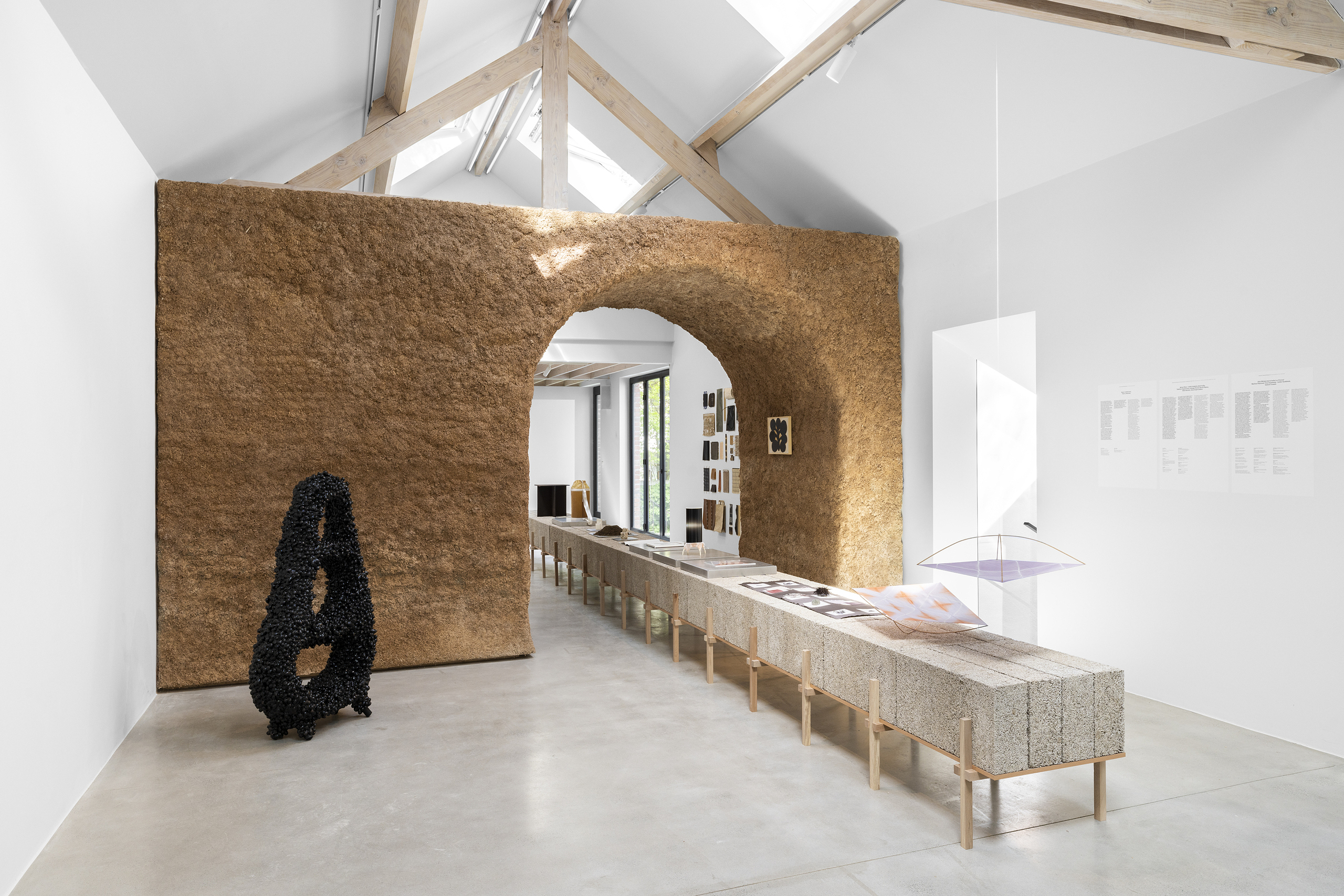
La Collection Thalie accueille dans son espace d'été arlésien un nouvel accrochage d’œuvres dédiées au textile, une proposition curatoriale qui entre en résonnance avec la pratique de Leo Orta, designer invité en résidence et les objets d’ALEOR, studio de création dédié au design biosourcé basé à Bruxelles. Alors que les œuvres de la Collection donnent forme à des imaginaires portés par des artistes, ALEOR confronte ces récits au réel. Le studio déploie des méthodes d’investigation ancrées dans le territoire — glaner, collecter, observer, expérimenter — pour faire émerger des récits situés. En immersion sur le territoire camarguais, le travail de Leo Orta agit ici comme un véritable catalyseur. Il interroge l’avenir de certaines filières locales, notamment la vannerie, à partir desquelles le designer imagine une collection d’artefacts à la fois ancrés dans la tradition et ouverts à des perspectives spéculatives. À travers ces démarches, art et design deviennent des outils d’archivage critique, de transmission et de réactivation des savoirs.
Tisser, ici, ne signifie pas seulement produire une étoffe. C’est faire dialoguer les matières et les usages, recomposer le monde à partir de ce qui nous attache au vivant. Le textile devient alors une structure de pensée, une manière d’habiter les paysages, de faire mémoire et d’ouvrir de nouveaux imaginaires.
La mémoire des paysages
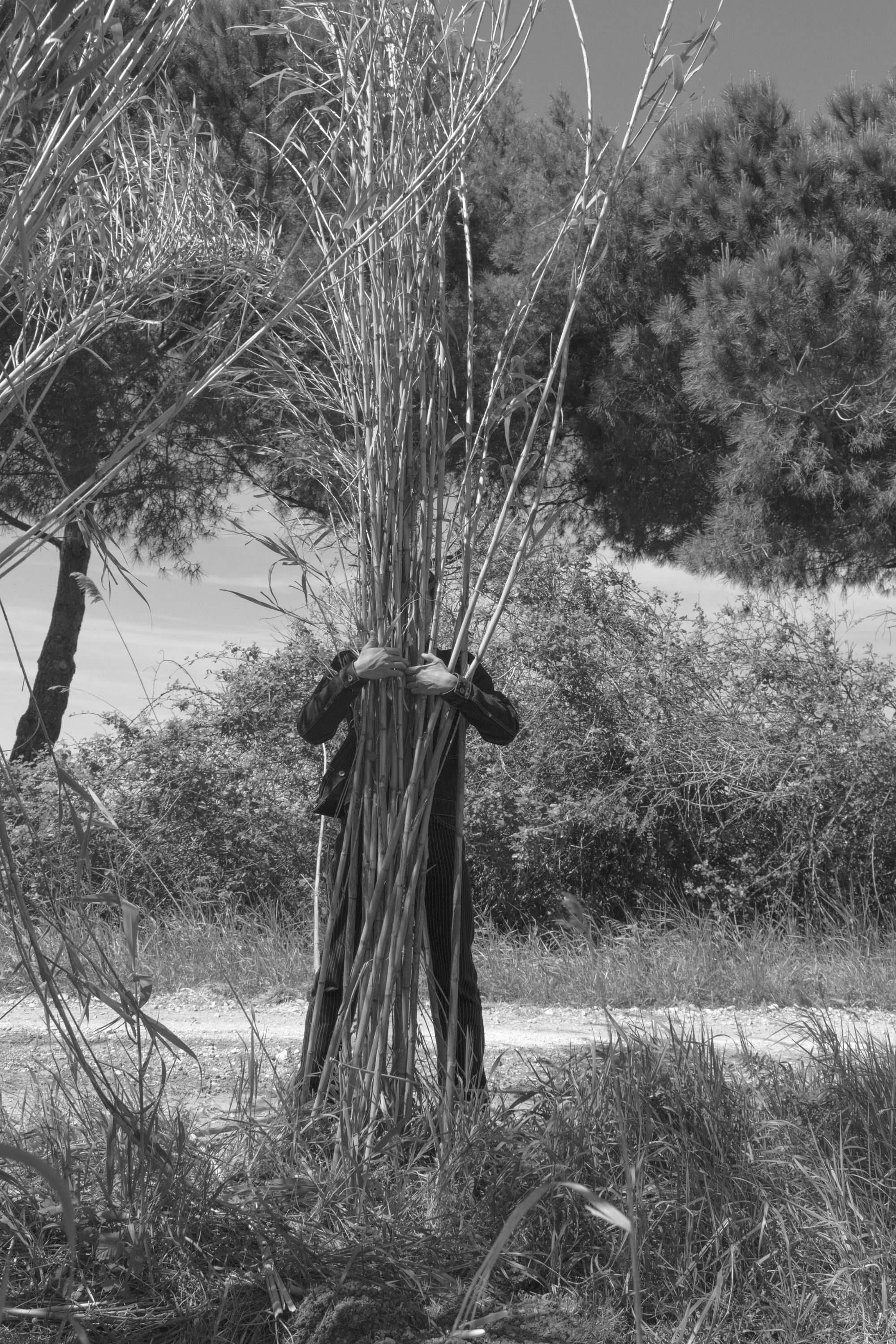
Dans le couloir de l’entrée, une série de photographies témoignent du travail de collecte de Leo Orta en Camargue pour réaliser ses pièces en vannerie. Sensible et poétique, la pratique sur l’image d’Ilanit Illouz et de Francoise Vanneraud, est également un arpentage silencieux, où la mémoire est physiquement mise à l’épreuve.
Les artistes et designers présentés ici déploient des méthodologies ancrées dans des contextes spécifiques, où la matière devient le lieu d’une attention au vivant. Diana Scherer explore le tissage souterrain des racines comme une architecture vivante, révélant les formes invisibles par lesquelles la nature organise sa croissance. Rosana Escobar, en Colombie rurale, développe des réponses écosystémiques liées aux fibres naturelles et à la structuration de filières territoriales, où design, communauté et environnement se répondent. Elise Peroi par le tissage, fait du geste textile un outil de lecture sensible du paysage. D’autres artistes déplacent la fibre vers des expérimentations formelles et sensorielles : le raphia et les compositions symétriques d’Amina Agueznai. Les paysages de tissus plissés de Simone Pheulpin, maintenus par des centaines d’aiguilles invisibles, se lisent comme des stratifications, à la manière d’une cartographie vivante, révélant une technique qui repousse les limites de la matière. Tandis que Max Funkat, à travers l’objet, invite à la commémoration et à une mémoire vivante des disparus, où matière et formes se répondent pour engager un dialogue avec l’au-delà. Dans cet ensemble, le paysage devient une mémoire active où les pièces en révèlent les milieux, les fragilités et les puissances latentes.
Le textile comme récit
Dans son étymologie première, le textile est indissociable du texte : tous deux procèdent du texere, « tisser », « entrelacer ». Cette origine commune engage une compréhension matérielle et sensible du récit, où le sens se construit autant par l’agencement que par le geste. Ces formes narratives orientent le regard et guident la lecture. Elles proposent des parcours, suggèrent des interprétations, ouvrent des espaces d’imaginaire. Le textile devient alors un lieu de projection, capable de déplacer notre perception et de nous inviter à habiter autrement le réel.
La restitution de la résidence de Leo Orta s’appuie sur le réveil de savoir-faire vernaculaires, ainsi que sur les plantes qui leur sont associées, telles que le rotin ou la canne de Provence. À travers l’objet, envisagé comme un manifeste, il s’agit de raviver des savoir-faire oubliés, notamment liés à la vannerie autrefois pratiquée dans la région. Les objets deviennent ainsi des points d’entrée pour réactiver, reconfigurer et prolonger un langage textile en dormance, tout en ouvrant un lien à la fiction : celui d’un territoire où les gestes disparus continuent d’agir, comme des récits matériels en suspens.
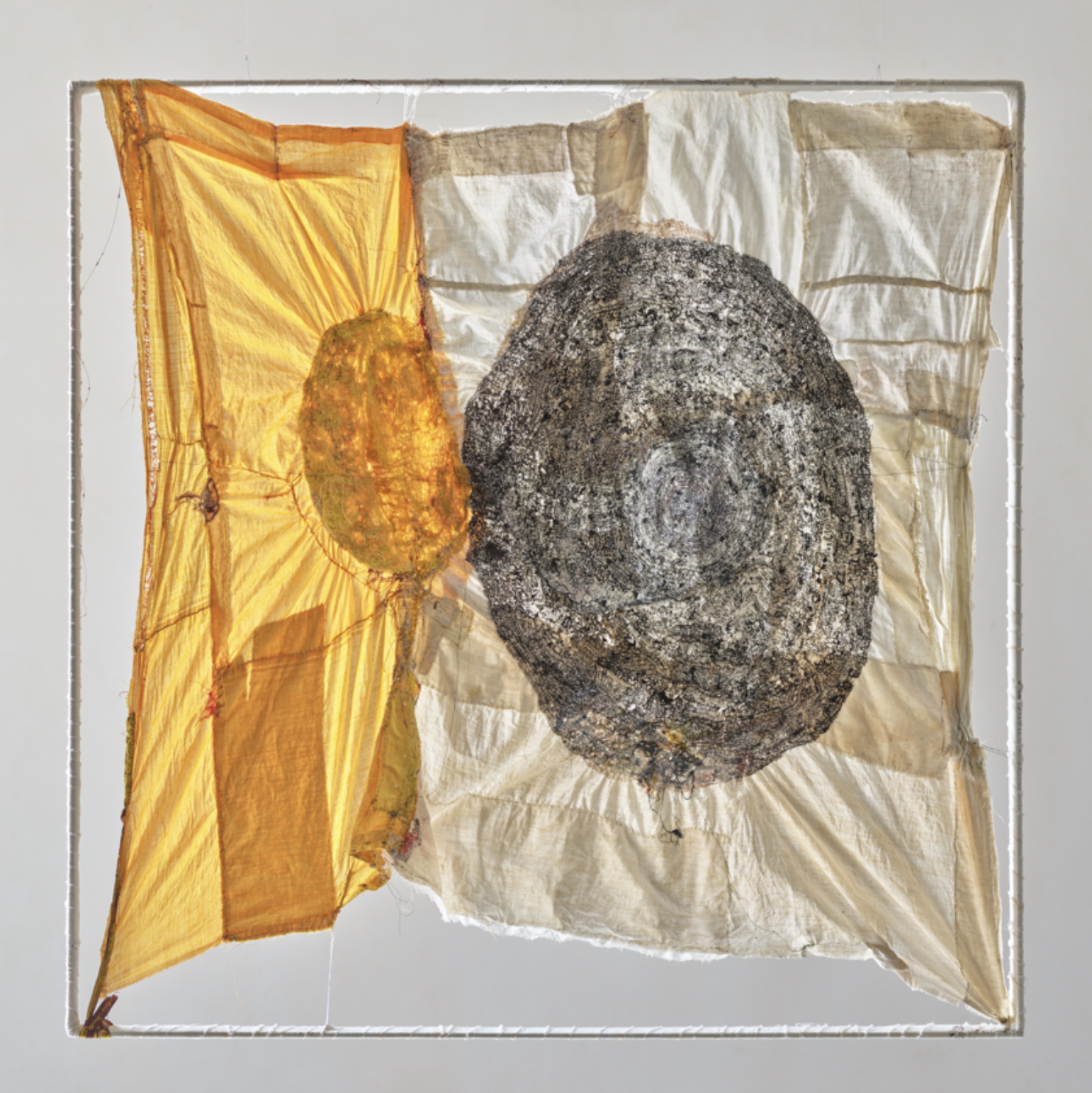
Broderie, marqueterie de paille, tissage, sont autant de techniques qui se répondent, afin de créer des ponts entre différentes temporalités et narrations. À l’image du travail de Sheila Hicks, fascinée par les structures, les formes et les couleurs, ces pratiques s’enrichissent d’influences multiples.
Le textile peut également se faire éloge de la lenteur et de la répétition mais aussi donner corps à nos émotions comme chez Junko Oki, dont la pièce brodée à la main sous la forme d’un cocon, rejoue les cycles d’une métamorphose, en redonnant vie à des textiles anciens. Asemahle Ntlonti tisse la mémoire des femmes Xhosa fil après fil, des gestes hérités que ses mains refusent de laisser disparaître. Pour Majd Abdel Hamid, broder est une façon de résister, par la lenteur imposée de l’artisanat, comme une réponse humble et obstinée aux turbulences du monde.
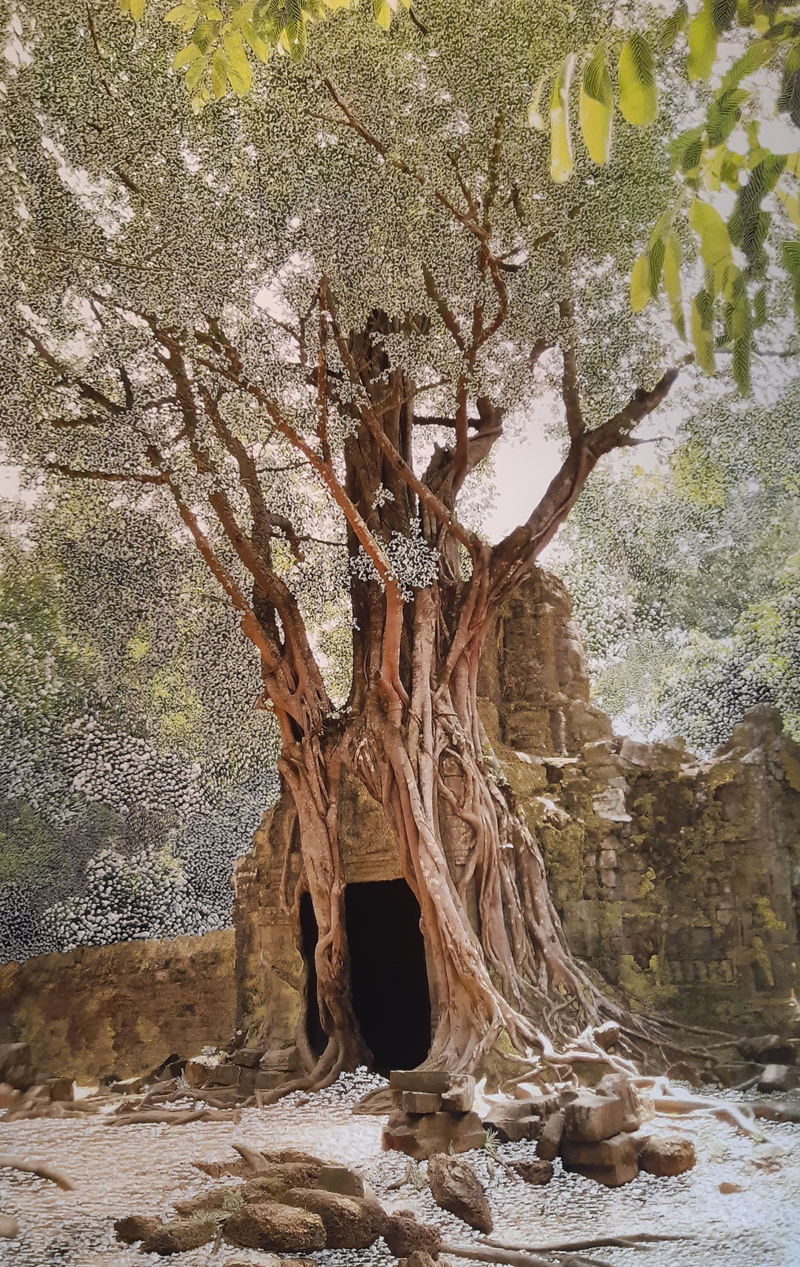
Les œuvres sont autant des réservoirs de récits et de transformations : le masque-totem en laine tuftée de Caroline Achaintre, les compositions abstraites de Lucy et Jorge Orta, les tissages colorés et fantasques de Georges Tony Stoll, ou encore la broderie-paysage d’Eva Jospin, cernée de carton sculpté, brouillent les frontières entre artisanat, fiction et projection symbolique. Ici, le textile porte une vision du monde, attentive aux liens, aux blessures, aux survivances du temps comme chez Edith Dekyndt dont le langage conceptuel et poétique prend sa source dans la matière.
Avec les oeuvres de Majd Abdel Hamid, Caroline Achaintre, Amina Agueznay, Cathryn Boch, Ange Dakouo, Edith Dekyndt, Pauline Guerrier, Sheila Hicks, Ilanit Illouz, Eva Jospin, Asemahle Ntlonti, Junko Oki, Lucy + Jorge Orta, Elisa Peroi, Simone Pheulpin, Kustaa Saksi, Sidival Fila, Kiki Smith, Georges Tony Stoll, Françoise Vanneraud et Rosana Escobar, Diana Scherer, Max Funkat (ALEOR).
Designer invité Leo Orta, présentation de ses pièces luminaires réalisées en vannerie à l'issue de sa résidence en Camargue. Lire plus sur le projet de résidence ici.
À propos de la Collection Thalie à Arles
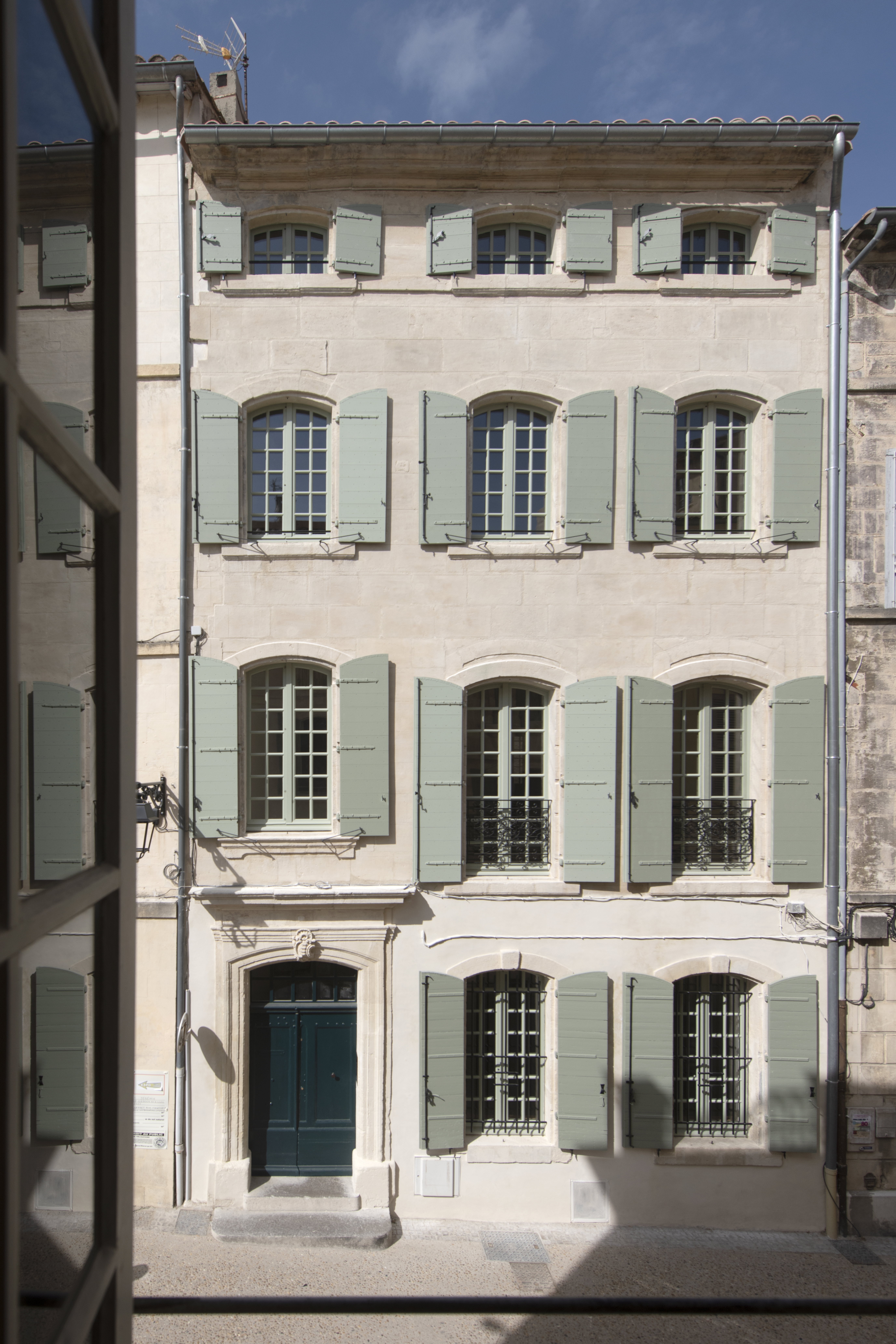
Située au pied des arènes d'Arles, la Collection Thalie expose chaque saison estivale à la fois la collection d'art contemporain et des créateur·ices invité·es en résidence autour de pratiques intégrant le design biosourcé, l'artisanat et les ressources du territoire. La collection d’art reflète un engagement pour les récits écologiques, les pratiques qui intègrent les savoir-faire et l'émergence des scènes du Sud Global ; elle est abritée dans un ancien hôtel particulier du XVIIIe siècle. Œuvres textiles, céramiques, sculptures, photographies et commandes d'œuvres d'artistes in situ y dialoguent chaque saison.
À propos d’ALEOR Design (Brussels)
ALEOR Design est un studio de création dédié au design du vivant, qui défend, à travers une offre de conseil, des objets-manifeste et l’artisanat, un design biosourcé ou upcyclé pour transformer les industries créatives et l’habitat de demain.
Commissariat & équipe
Commissariat : Nathalie GUIOT et Alexia VENOT
Production: Giulia Blasig et Sien Van den Eynde
Régie des oeuvres: Rémi Bragard
Régie du bâtiment: Amandine Pravet
Médiation: Maia Le Borgne de la Tour, Alexia Venot et Sien Van den Eynde
Practical info
Vernissage: le 6 juillet, de 19h à 21h (sur invitation)
Exposition: Du 7 juillet au 31 juillet
Jours d'ouverture : du mardi au samedi de 11h à 18h.
34 rue de l'Amphithéâtre, 13200 Arles, France
Programme public:
Habiter la matière, une rencontre entre Sophie Dries et Leo Orta, modérée par Alexia Venot.
Le 8 juillet à 17h. L'entrée est libre dans la limite des places disponibles.
Des visites commentées seront proposées chaque mercredi et samedi à 17h, à l'exception de la semaine professionnelle des Rencontres de la photographie (réservation obligatoire via le lien ici, tarif unique : 7 €*)
Entrée gratuite pendant la semaine professionnelle des Rencontres de la photographie, entrée payante à partir du lundi 13 juillet, Tarif unique 5 euros, tarif réduit 4 euros pour les arlésiens, gratuit pour les étudiants, moins de 12 ans, carte ICOM et Presse
Fondation Thalie, Arles, 2025
Geology of Souls, an exhibition about Life narratives
A selection of artworks from our collection
Fondation Thalie, Arles, 2024
Sara Ouhaddou : Take a Seat, Have Some Tea
When Art reinterprets ancestral technics